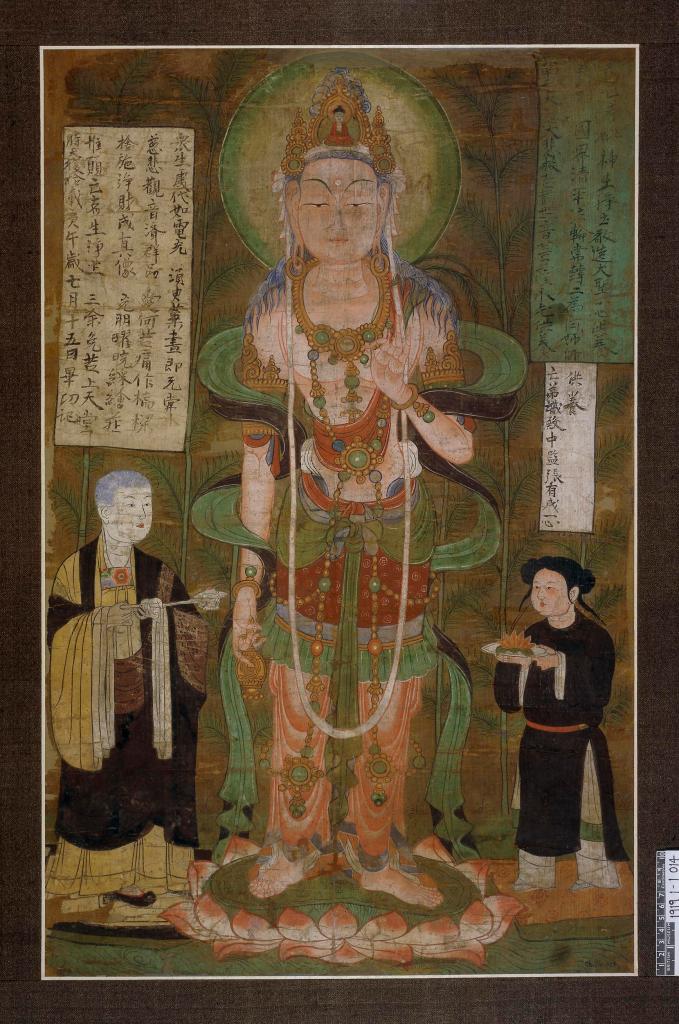
Avalokiteśvara (Guanyin 觀音, a localised Buddhist divine figure), painting, 910 AD. Dunhuang, China, British Museum 1919,0101,0.14, shared under a CC BY-NC-SA 4.0 license.
Gods in imperial China
There are many gods and goddesses in Chinese religions. They play a wide range of roles that are related to human life. Many gods only show power in their local areas, whereas others can extend their power to other places. In such cases, they become regional or state-wide gods. Unlike Greek gods, Chinese gods are rarely family members with each other.
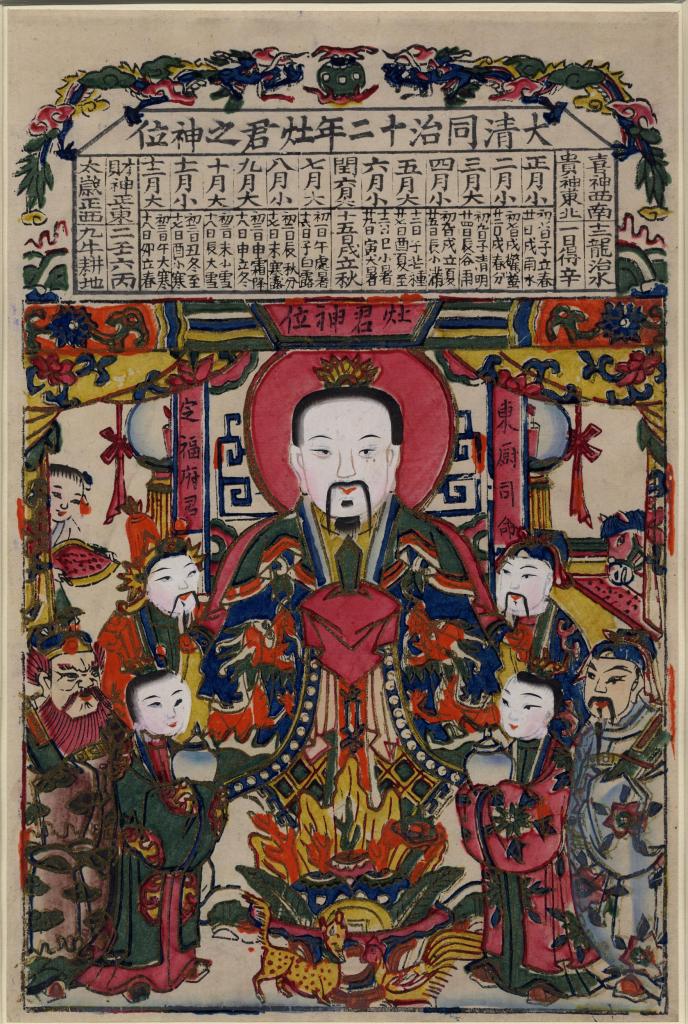
Well-known Chinese Gods and Their Roles
Some gods are known by their main roles:
- Door God: Guarding the entrance of a house.
- Stove God: Protecting a household and overseeing people’s daily deeds.
- Ancestral God: Overseeing the well-being and safety of a household generally.
- God of Wealth: Giving wealth and prosperity.
- Earth God: Ensuring the safety of a household or a neighbourhood.
- Temple Guardian Gods: Protecting a particular temple.
- City God: Ensuring the safety and order of a city.
- Dragon God: Giving rain.
- God of the Eastern Peak: Administering life, death, and underworld justice.
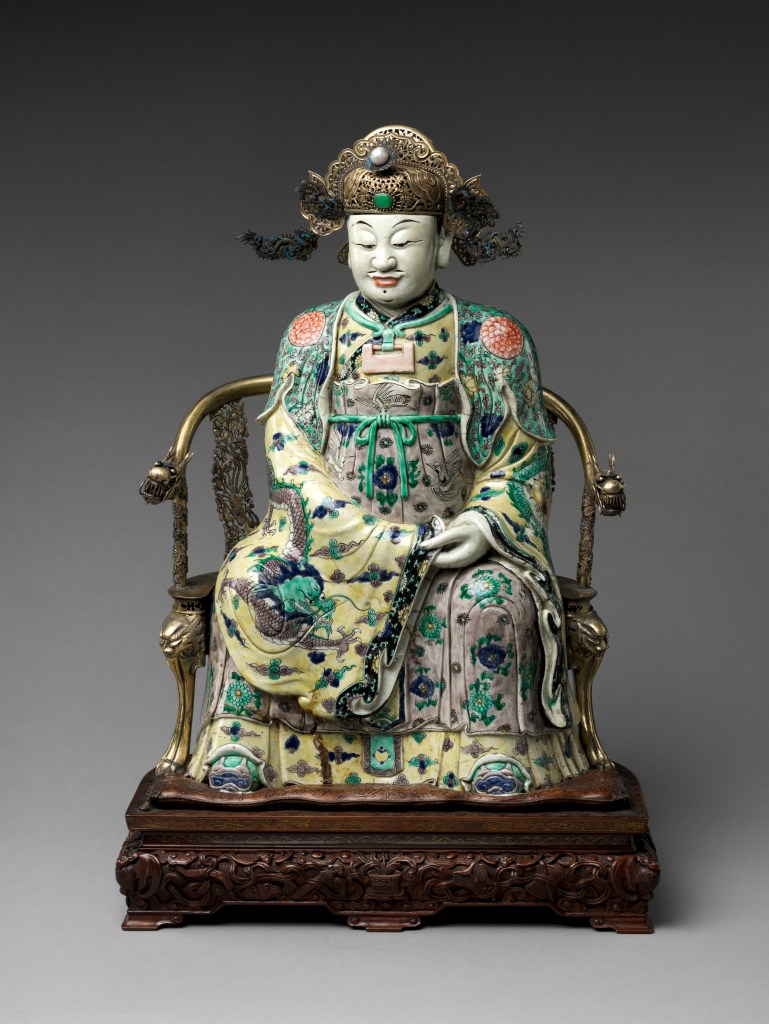
Other gods are known as individual gods, usually with unique stories of their own:
- Emperor Guan: Also known as the God of War, who protects the state in military campaigns.
- True Warrior: A stellar god who protects people’s safety and known to be holding a sword.
- Wenchang: Helping with exams and official career.
- Five Sinister Gods: A group of five gods doing both harm and good to people.
- Guanyin: Well-known for her compassion, she offers cures, offspring, and other blessings.
- Heavenly Consort: A goddess who offers safety in maritime travel in particular.
- Jade Maiden: A goddess on the Eastern Peak, who gives offsprings and presides over human life and death.
- Jade Emperor: The ruler of the gods; the top god in Chinese religions.
- And many more…
How People Choose Their Gods
Given that there are so many Chinese gods (only a small number of whom are introduced above), how do the Chinese people choose which god to turn to in times of need? This can be affected by different factors, such as:
- Specific life problems. Such as illness, safety, poverty, examination stress, etc.
- A god’s expertise. Some gods are better at solving certain issues than others.
- Physical distance. Local gods’ temples are easier to access than the temples of gods faraway.
- Existing belief. One’s existing religious belief may limit his or her choice of which gods to turn to.
- Social relations. Family and friends may also influence one’s choice of gods.
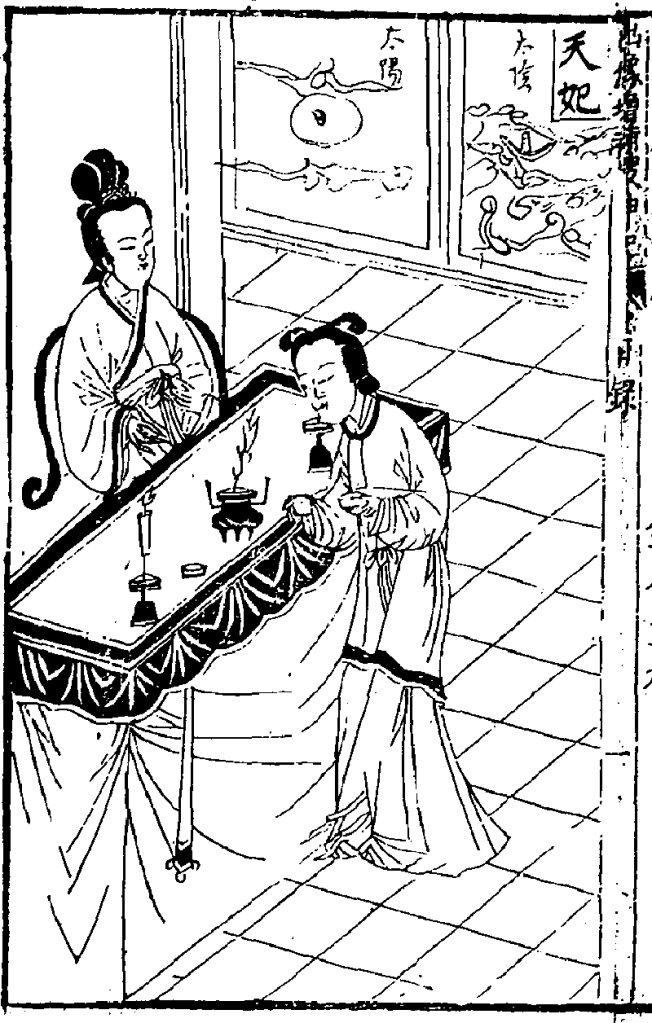
Reading Stories
From the Record of the Listener 夷堅志, a 12th-century Chinese collection of accounts about gods and spirits.
In groups of three or four, complete the following tasks:
a) make notes of the gods and their powers or actions;
b) answer the questions in the quiz.
Anecdote One
Context: A man’s deceased father comments on the powers of different gods worshipped in the household.
[Mao’s father] pointed at the Five Sinister Gods outside the door and said: “Their divine powers are great. Wandering ghosts are not allowed in.” He then pointed at the True Warrior God and said: “If you worship him with caution, you may escape from going to hell after death; instead, you will go directly to be a disciple of the North Dipper [a stellar god]…”
Source: ‘The father and grandfather of Mr. Mao’ 毛氏父祖 (jia, juan 15).
Quiz: What are the father’s criteria of choosing a god?
A. a god’s merit
B. a god’s power
C. both
D. none of the above
Anecdote Two
Context: This passage concerns a household worshipping many different gods. It gives vivid portraits of the gods through the eyes of a ghost.
My father said, “I worship the True Warrior God because he is very effective, and I also have images of the Buddha, and of the earth god and stove god. How is it that you come here?” The ghost said, “The Buddha is a benevolent deity who does not concern himself with such trivial matters; every night the True Warrior unbinds his hair, grasps his sword, and flies around the roof. I carefully avoid him, that’s all. The earth god behind your house is not easily aroused. Only at the small temple in front of your house [to the stove god] am I reprimanded every time I’m seen. I just entered the kitchen, and His Lordship asked, ‘Where are you going?’ I answered, ‘I’m just looking around.’ He upbraided me, ‘You’re not allowed here.’ I said, ‘I do not dare,’ and came here…” (Trans. Valarie Hansen, Changing Gods in Medieval China, pp. 171-172)
Source: ‘The Records Office at Xiuzhou City’ 秀州司錄廳 (yi, juan 8).
Quiz: Which of the gods did well in protecting the household, and which did not?
Anecdote Three
Context: This is a rare account about the dangers of worshipping many gods.
A very wealthy man … deeply believed in ghosts and spirits. Wherever he went, near or far, for big or small events, he would always consult the gods. If the gods said yes, he would go; otherwise, he would not. He also believed in seers and ritual masters, and he worshipped unlawful gods with special care. But months and years passed by, most of his prayers did not work. So, he neglected his worship and it ultimately turned into disrespect … After that, various strange things started to happen in his house …
Source: ‘Nie Gongfu’ 聶公輔 (zhiyi, juan 1).
Quiz: From all three stories above, when people worship many gods at the same time, what could happen?
A. people will be blessed
B. people become careless or disrespectful
C. gods become angry
D. all of the above
 SAVING GODS.com