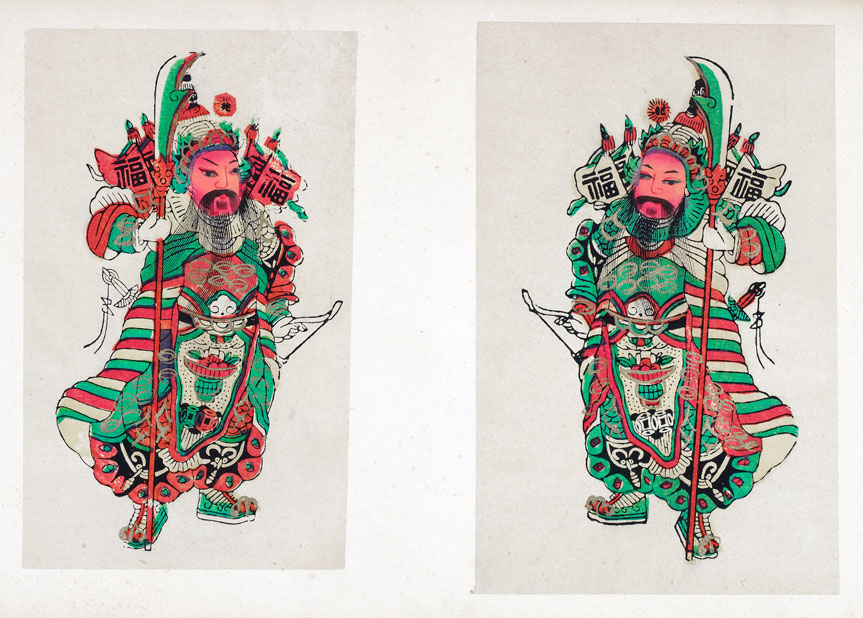
Although many Chinese gods were not clearly placed in a divine hierarchy, some source texts do show the existence of such notions. A divine hierarchy in traditional China was analogous to an administrative structure based on appointments by the top god, the High Emperor, or the Jade Emperor as perceived in the Daoist tradition. On different levels of the hierarchy there were regional gods, such as the Eastern Peak, and local gods, such as the City Gods and Earth Gods. In a divine hierarchy, it seems often the case that the bottom level came with more clearly defined duties, whereas higher up the hierarchy came more supervisory roles. The sources below show that some gods at the lower levels, such as the Stove Gods and Earth Gods (3.4), were more directly involved in human affairs than the gods at the middle- to top-levels (3.1).
The functioning of a divine hierarchy hinged on obedience. Any gods that defied orders were supposed to be demoted or expelled. But if they could provide good reasons or alternative arrangements, they might sometimes be exempt from penalties. One source below (3.2) shows that a divine hierarchy allowed for a certain degree of negotiation and expediency. Another source (3.5), in contrast, shows that there were rigid penalties for those gods who defied hierarchical rules. Not only was Chinese divine hierarchy influenced by the hierarchy of this world (3.3), but in some cases, conflicts arising in divine hierarchy could only be remedied with human intervention (3.5).
3. 1 Ruled by the Jade Emperor
唐天祐初,有李甲,本常山人。逢歲饑饉,徙家邢臺西南山谷中。樵採鬻薪,以給朝夕。曾夜至大明山下,值風雨暴至,遂入神祠以避之。俄及中宵,雷雨方息,甲即寢於廟宇之間,松栢之下。須臾有呵殿之音,自遠而至。見旌旗閃閃,車馬闐闐,或擐甲冑者,或執矛戟者,或危冠大履者,或朝衣端簡者,揖讓升階,列坐於堂上者十數輩,方且命酒進食。歡語良久。其東榻之長,即大明山神也,體貌魁梧,氣岸高邁。其西榻之首,即黃澤之神也。其狀疎而瘦。其音清而朗。更其次者,云是漳河之伯。餘即不知其名。坐談論。商搉幽明之事。其一曰:「禀命玉皇,受符金闕。太行之面,清漳之湄,數百里間,幸為人主,不敢逸豫怠惰也。不敢曲法而狥私也。不敢恃尊而害下也。兢兢惕惕,以承上帝,用治一方。故歲有豐登之報,民無扎瘥之疾。我之所治,今茲若是。」(…)
Translated text: In the early years of the Tianyou period (904-907) of the Tang dynasty, there was a man named Li Jia, who was originally from Changshan. One year, due to a famine he and his family migrated to a mountain valley southwest of Xingtai. He made a living by gathering and selling firewood. Once in the night, he went to the foot of the Great Light Mountain. A storm suddenly started right then, so he entered a shrine for shelter. The storm did not stop until midnight. He went to sleep under the pine trees between the halls of the shrine. Soon he heard from a distance the sound of people clearing the way. He saw shining flags and bustling horses and carriages. [In the procession], some wore armour, some held halberds, some wore tall headdress and big footwear, some wore formal clothes that were simple. They bowed to each other with clasped hands and ascended the steps. More than ten of them seated themselves in a line in the hall. As wine and food were being served, they talked to each other in high spirits for a long time. The senior one who was seated on the east end was the God of the Great Light Mountain.1 He was tall, strong, charismatic, and majestic. The one seated on the west end was the God of the Yellow Marsh. His figure was light and thin, but his voice was pure and clear. The one seated beside him was said to be the Earl of the Zhang River.2 The names of the rest were unknown to Li Jia.
They sat and talked about matters of the worlds of the living and the dead. One said: “I was appointed by the Jade Emperor3 and received a tally of appointment from the Golden Gate. The area facing Mount Taihang on the shore of the pure river Zhang spreads over several hundreds of square miles. I am fortunate to be the administrator of its people. I dare not slacken off my duties. I dare not bend rules to suit private purposes. I dare not take advantage of my superiority to harm those below me. I hold fear and caution in serving the High Emperor and in governing this land. As a result, there have been rewards of harvest every year and people do not suffer from plagues or illnesses. The area under my administration has remained so until today.” (…)
Source: ‘Li Jia’ 李甲, in Taiping guangji 太平廣記 (Extensive Records of the Taiping Era), compiled by Li Fang 李昉 (925-996), reprint Beijing: Zhuhua shuju, 1961, p. 1135-6.
3. 2 Earth Gods under a City God
慶元元年正月,平江市人周翁瘧疾不止。嘗聞人説瘧有鬼,可以出他處閃避,乃以昏時潛入城隍廟中,伏卧神座下,祝史皆莫知也。夜且半,見燈燭陳列,兵衞拱侍,城隍王臨軒坐,黃衣卒從外領七八人至廷下,衣冠拱侍。王問曰:「吾被上帝敕令此邦行疫,爾輩各爲一方土地神,那得稽緩。」皆頓首聽命。其中一神獨前白曰:「某所主孝義坊,誠見本坊居民家家良善無過惡,恐難用病苦以困之。」王怒曰:「此是天旨,汝小小職掌,只合奉行。」神復白曰:「既不可免,欲以小兒充數如何?」王沉思良久曰:「若此亦得。」遂各聲諾而退。周翁明旦還舍,具以告人,皆哂爲狂譫,無一信者。至二月,城中疫癘大作,唯孝義一坊但童稚抱疾,始驗周語不誣。迨病者安痊,坊衆相率歛錢建大廟,以報土地之徳。
Translated text: In the first month of the first year of the Qingyuan period (1195), an old man surnamed Zhou from Pingjiang (present-day Yueyang in north Hunan province) suffered from persistent fevers. He once heard people talking about the ghost of fevers, which could be avoided by escaping somewhere else. He then picked a time at dusk to sneak into the Temple of the City God.4 He lied facing down beneath the divine throne, and went unnoticed to the temple wardens. At midnight, he saw that lights and candles were aligned in rows. Amid soldiers and guards, there was seated the King of City Walls and Moats (the City God) in the front of the palace. Pawns dressed in yellow led seven or eight people from outside to the courtyard, all formally dressed and standing in waiting. The king asked: “I received an imperial order from the High Emperor to spread plague throughout the city. Each of you are one of the Earth Gods5 in charge of a local place. How can you delay it?” The Earth Gods all lowered their heads and listened. But one of them stepped out and said: “In the Ward of Xiaoyi6 under my administration, I indeed see that each household of the neighbourhood is good and benevolent. They have not done anything wrong or evil. It would be inappropriate to afflict them with disease and suffering.” The king was infuriated: “This is Heaven’s order. You, a minor administrator, should only obey.” The Earth God again asked: “If it is inevitable, can I fulfil the quota by afflicting the children?” The king thought for a long while and said: “That also counts.” Each of the Earth Gods then got the message and retreated. The next morning, the old man Zhou returned home and told people about it. But people all laughed at him as if he were crazy. No one believed him. By the time of the second month, a severe plague broke out in the city. Only in the Ward of Xiaoyi were there merely children falling ill. It was only then that Zhou’s words were proved true. After the sick recovered, people in the neighbourhood donated money to build a grand temple to repay the Earth God’s favour.
Source: ‘Xiaoyifang tudi’ 孝義坊土地 (The Earth God of the Ward of Xiaoyi), in Hong Mai 洪邁 (1123-1202), Yijian zhi 夷堅志 (Record of the Listener) (reprint, Beijing 1981), zhi ying, 6.927-28.
3. 3 Influence from the human world
贛州寧都縣胡太公廟。其神名雄。邑民也。生有異相。顧自見其耳。死而著靈響。能禍福人。里中因為立祠。崇寧初、邑士孫勰志康、夢白須翁邀至其家。問曰、如何可得封爵。孫意其神也。告曰、宜行陰功。無專禍人。翁曰、吾豈禍人者。吾為天門授事。日掌此邦人禍福。必左右竊聞之。託吾所云。妄出擾惑爾。孫曰、歲時水旱。最民所急。若能極力拯濟。則縣令郡守。必以上於朝。封爵可立致也。覺而審其為太公。五年丙戌、縣大火。禱於祠。俄頃風雲怒起。如有物驅逐之。火即滅。縣以事白府。奏賜博濟廟。明年。遂封靈著侯。噫!神既受職於天。猶規規然慕世之榮名。唯恐不得。乃知封爵之加固非細事。孫公夢中能曉神如是。可謂正士矣。
Translated text: At the Temple of Grandfather Hu at Ningdu county in Ganzhou prefecture (in present-day Jiangxi province), the god’s given name is Xiong. He was a local of the county. Born with an extraordinary physiognomy,7 he could turn to see his own ears. He showed divine power after his death8 by bringing people disasters or blessings. For this, people in his neighbourhood established a shrine for him. In the early years of the Chongning reign (1102-1106), a local scholar, Sun Xie, curtesy name Zhikang, dreamt of being invited by a white-bearded old man to his home. The old man asked: “What should I do in order to obtain a title?” Sun thought that the old man must be a god and he replied: “You should demonstrate hidden merit; do not just afflict people.” The old man said: “I am not someone who would afflict people. I am the Receptionist Censor at the Celestial Gate in charge of day-to-day disasters and blessings of the locals. It must have been my retainers who surreptitiously heard about what I do and went about causing disturbance and confusion in my name.” Sun said: “Floodings and droughts of a year are always people’s utmost concerns. If you can do your best to save them, the Magistrates and Prefects will surely report your merits to the court.9 A title can then be obtained immediately.” Sun woke up and knew that the old man was Grandfather Hu.
In the fifth year (1106), a big fire broke out in the county. People prayed at the shrine. Suddenly, furious wind and clouds arose as if chased by something. The fire was extinguished immediately. The county reported the incident to the prefecture, which then reported to the emperor, who awarded the title ‘Temple of Broad Salvation.’ The next year, the god was enfeoffed ‘Marquis of Remarkable Efficacy.’ Alas! Even a god appointed by Heaven10 would still aspire for this-worldly fame and worry much about not obtaining it. From this we know that the conferment of titles is not a small thing. The revered Mr. Sun was able to inform the god that way in a dream. He was truly a scholar of integrity.
Source: ‘Tianmen shoushi’ 天門授事 (Receptionist Censor at the Celestial Gate), in Hong Mai 洪邁 (1123-1202), Yijian zhi 夷堅志 (Record of the Listener) (reprint, Beijing 1981), ding, 10.622.
3. 4 Stove Gods at the bottom
韓蓄齋,郡中稱長者,其家傭書人病疫既愈,為蓄齋言被土地攝去寫冊。冊充棟,十餘人晝夜不停筆,皆人家竈神所報,凡善惡鉅細,舉目舉時,雖飲饌食品,以至床幃間謔浪之語,靡不具載。土地稍芟其瑣者,以報縣隍;縣呈之郡,郡上東嶽,東嶽奏上帝。至帝前之奏,十惟四五,疎大節而已。帝以嵗終決賞罰,復遞下至土地施行焉。而竈神原報,仍封鈐而存之土地,俟其人命盡,對勘注銷。傭者寫七日乃放還,竊記相識者數人,後皆分毫不爽。
Translated text: Han Xuzhai was one of the elders in the prefecture. A scribe employed in his household had just recovered from a serious illness. He told Xuzhai about being taken by an Earth God to copy documents filling a whole house. More than ten people worked with their writing brushes non-stop day and night. All the documents were reports from the Stove God11 in people’s households. All of people’s deeds, good or evil, big or small, were listed by category and time. Not to mention food and drink, even obscene jokes behind curtains are all recorded in detail. The Earth God would trim off the trivial ones slightly and report them to the City God of the county. The county then sends them to the prefecture. The prefecture submits them to the Eastern Peak.12 The Eastern Peak presents them to the High Emperor. By the time the reports reach the emperor, they would be reduced to only four or five out of ten, merely giving an outline. At the end of year, the emperor decides on awards and punishments, which again are passed down to the Earth Gods for implementation. The original reports by the Stove God are still sealed up and kept by the Earth God, who waits until a person dies to compare and write off the records. The scribe had copied for seven days before being released to come back. He privately kept in mind [the records of] a few people he knew, which were later proved to be exactly the case.
Source: ‘Tudi ce’ 土地冊 (The Earth God’s documents), Liaozhai jiyi 聊齋集異 (Collection of Strange Tales from the Studio of Leisure), imprint by Li Helin 李鶴林 in 1795 (reprint, Taibei 1991), 3.50a-51a.
3. 5 The story of a City God
乾隆間,郡守胡文伯清廉慈惠,而政尚嚴肅。會大旱,六旬不雨,屢禱無應。文伯曰:「天降旱災,過由守令。」乃清獄訟,禁屠酤,率屬宿廟,蒲冠草履,步禱諸神,旱如故。為文禱於城隍神,夜夢神謂曰:「此天意,冥吏分卑,何能為?後夜五更,天寧寺門外有頎而長者,鍾離仙也。君挈以左手,竭誠求之,當可致雨。」越日,文伯宿寺以待,至時,果有數丐宿寺門外,文伯伏地泣禱,丐曰:「我乞食者,安知祈雨?」推欲行,文伯堅執其手,膝行隨之。丐指曰:「雨至矣!」轉瞬失所在。俄傾大雨,一晝夜,八邑霑足。復夢神曰:「殆矣!我以妄泄致雨干天咎,後月某日將斬於東郊。」文伯曰:「守為民累神,願先期自殺以贖。」神曰:「無益也,君能詳請速奏加封,則免禍矣。」文伯寤,立為文申大吏,入奏得旨,加封威靈公。是歲,他郡皆災,常獨轉歉為豐。文伯倡蠲修廟,至今神靈赫濯焉。
Translated text: During the Qianlong period (1735-1796), there was a Prefect Hu Wenbo who was an honest and upright man. He showed sympathy and brought benefits to the people. But his administration was strict and serious. During a severe drought, it had not rained for two months. Many prayers were to no avail. Wenbo said: “Heaven has inflicted a drought; and it is the prefect’s fault.” He then cleared legal suits, banned slaughtering and alcohol, led subordinates to stay in temples, wore a hat and shoes made of weeds to travel on foot and pray to various gods. But the drought persisted. He wrote a prose prayer to the City God. That night, he dreamt of the god saying: “This is Heaven’s intention.13 How can a humble clerk of the underworld do anything about it? But in the early morning of the day after the next, there will be a thin, tall elder outside the gate of the Temple of Heavenly Peace. That will be Immortal Zhongli.14 Hold him with your left hand and plead with him as hard as possible. He should be able to get rain.” A day later, Wenbo stayed in the temple and waited. When the time came, he indeed found several beggars sleeping outside the temple gate. Wenbo prostrated on the ground and pleaded in tears. One beggar said: “I am just a beggar. How can I know how to pray for rain?” He pushed Wenbo aside and tried to leave but Wenbo held his hand tight and followed him on knees. The beggar pointed away and said: “Rain has come!” Suddenly, the beggar disappeared. In an instant, there was a big rain which lasted a whole day and night. All eight counties got enough rain.
Wenbo again dreamt of the City God saying to him: “I’m doomed! I have invited punishment from Heaven for leaking the secrets of getting rain. On the XX day of the next month, I will be beheaded in the eastern outskirts.” Wenbo said: “I have involved you in this trouble for the sake of the people. I hope to take my own life ahead of that date in place of you.” The god said: “That will be of no use. But if you can report immediately to the court in detail and plead for a higher title, I will be exempt from punishment.” Wenbo woke up and wrote right away to a senior official, who reported to the emperor and obtained an edict awarding the higher title “Duke of Powerful Efficacy.” That year, all other prefectures went through disasters, but Changzhou was the only county able to turn crop failures into a harvest. Wenbo raised funds to refurbish the [god’s] temple. Up to this day, the god is still showing great power there.
Source: ‘Zhiyu’ 志餘 (Subsidiary matters), Wujin Tianningsi zhi 武進天寧寺志 (Records of the Temple of Heavenly Peace in Wujin), compiled by Pu Yicheng 濮一乘 in the 1940s, reprinted in Zhongguo difangzhi jicheng: Siguanzhi zhuanji 中國地方志集成 – 寺觀志專輯 (Comprehensive Collection of Chinese Local Gazetteers: Special Collection of Temple Gazetteers) (Shanghai, 2016), vol. 4, p. 93.
Notes:
- God of the Great Light Mountain: probably a local mountain god of Xingtai (in present-day Hebei province) who, in the 10th century assumed the role of an administrator of an area but does not seem to appear in any later sources. ↩︎
- Earl of the Zhang River: great rivers were often given titles and ranks. ↩︎
- Jade Emperor: the Daoist version of the highest god of the divine world, also known as the High Emperor. ↩︎
- City God: the god overseeing the order and safety of a district, often regarded as the counterpart of a local administrator. ↩︎
- Earth Gods: gods overseeing the safety and order of smaller parts of a city or village. ↩︎
- the Ward of Xiaoyi: the name of the ward means ‘filial piety and righteousness.’ ↩︎
- extraordinary physiognomy: indicative of a person’s abilities, moral qualities, or fate according to fortune-telling. ↩︎
- divine power after death: many deified human figures – virtuous emperors, and meritorious officials or generals – were worshipped and offered regular sacrifices by the imperial state. ↩︎
- report merits to the court: one of the first steps in a local initiative to obtain titles for a god. ↩︎
- a god appointed by Heaven: Heaven was the ultimate ruler of the divine hierarchy. ↩︎
- Stove God: a god worshipped in households, thus able to closely oversee people’s behaviour. ↩︎
- Eastern Peak: originally the god of Mountain Tai, who became an empire-wide god during the Song. ↩︎
- Heaven’s intention: Heaven could administer punishments on the human world for chaos or moral failures. ↩︎
- Immortal Zhongli: a military commander from the second to third centuries who was later deified in the Daoist tradition as a master of internal alchemy. ↩︎
 SAVING GODS.com